
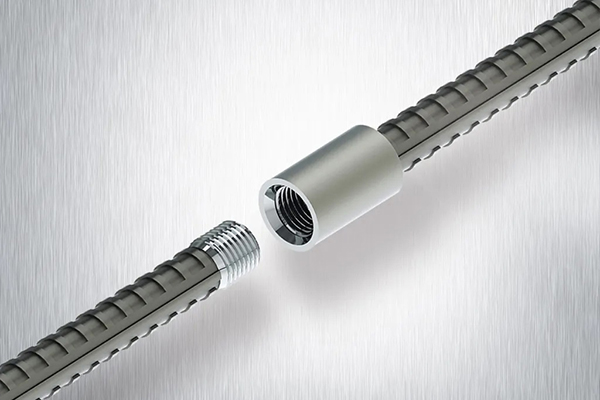
Post-tensioning technology has revolutionized modern construction, enabling engineers to create more substantial, durable structures with longer spans and thinner profiles. While post-tensioning systems include various tensioning elements, post-tensioning bars represent a specialized solution with unique advantages for specific bridge and building construction applications.
Bridge applications – Precision and power
In bridge construction, post-tensioning bars serve several critical functions:
External Post-tensioning for rehabilitation
When existing bridges require strengthening, external post-tensioning bars provide an elegant solution. Engineers can install these bars outside the original concrete structure to:
- Add compressive forces that counteract deterioration
- Restore or enhance load-carrying capacity
- Extend the service life of ageing infrastructure
- Minimize traffic disruption during rehabilitation
The ability to tension precisely, lock off securely, and potentially re-tension these bars years later makes them invaluable for bridge maintenance programs.
Transverse deck tensioning
In bridge decks, Post Tensioning Bars often run perpendicular to the main span, creating a compressed concrete slab that:
- Resists cracking under heavy wheel loads
- Improves waterproofing and corrosion resistance
- Reduces required deck thickness
- Enhances long-term durability in freeze-thaw environments
Segmental bridge construction
For segmental bridges built in sections, post-tensioning bars create solid connections between adjacent segments by:
- Pulling segments together with controlled force
- Creating watertight joints between sections
- Providing adjustment capability during alignment
- Enabling rapid construction with prefabricated elements
Building applications – Strength and versatility
In building construction, post-tensioning bars offer solutions for specialized structural challenges:
Transfer structures and girders
When supporting columns must be eliminated to create open spaces, massive transfer beams or girders take their place. Post-tensioning bars provide the tensile reinforcement needed to:
- Support enormous concentrated loads
- Minimize structural depth despite long spans
- Control deflection under varying load conditions
- Create column-free areas in lobbies, theatres, or parking structures
Rock and soil anchoring
Buildings constructed on challenging sites often require anchoring into bedrock or stable soil layers. Post-tensioning bars excel in these geotechnical applications by:
- Creating permanent anchors that resist uplift forces
- Stabilizing retaining walls against soil pressure
- Securing foundations in areas with poor soil conditions
- Providing measurable and adjustable anchoring forces
Seismic retrofitting
In earthquake-prone regions, existing structures can be strengthened using post-tensioning bars to:
- Tie structural elements together for improved lateral resistance
- Add ductility to otherwise brittle concrete connections
- Provide energy dissipation during seismic events
- Create continuous load paths through the structure
Advantages of conventional strand systems
While multi-strand tendons remain common in post-tensioning, bars offer distinct advantages in certain situations:
Superior stiffness
The solid cross-section of bars provides higher rigidity than equivalent strand bundles, resulting in:
- Less elongation under load
- More predictable tensioning behaviour
- Reduced long-term relaxation losses
- Better performance in compression when required
Simplified end anchorage
Bar systems typically use straightforward threaded nuts and bearing plates rather than complex wedge anchors, offering:
- More intuitive installation for construction crews
- Visual verification of proper engagement
- Easier protection against corrosion
- Simplified detensioning or adjustment if needed
Direct coupling capability
Unlike strands that require specialized anchors at coupling points, bars can be directly coupled using threaded connections, allowing:
- Unlimited length extension
- Easier navigation around existing utilities or structural elements
- Simplified field adjustments when encountering obstacles
- Reduced anchorage congestion in tight spaces
Implementation considerations
To maximize the benefits of post-tensioning bars, engineers and contractors should consider:
Protection against corrosion
As with all tensioned reinforcement, corrosion protection is paramount. Modern bar systems include:
- Factory-applied epoxy coatings or hot-dip galvanization
- Grease-filled plastic sheaths for unbonded applications
- Corrosion-inhibiting grout for bonded installations
- Specialized end caps and protection systems for anchorages
Tensioning sequence and monitoring
Proper tensioning procedures ensure optimal performance:
- Follow manufacturer-recommended tensioning sequences
- Monitor elongation and pressure simultaneously while stressing
- Document final tension values for quality assurance
- Consider the effects of concrete shrinkage and creep in design calculations
For engineers facing unique structural challenges, post-tensioning bars often provide the perfect balance of strength, adjustability, and long-term performance that conventional reinforcement methods cannot match.