
As warehouses and manufacturing facilities continue to improve workplace ergonomics and operational efficiency, material handling equipment has become increasingly important. Among the most widely used ergonomic lifting solutions are vacuum tube lifters and pneumatic lift assist arms.
Both systems are designed to reduce manual lifting effort, improve worker safety, and increase productivity. However, each solution offers different advantages depending on the application, product type, and operational requirements.
Understanding their pros and cons can help businesses choose the right lifting solution for their operations.
What Is a Vacuum Tube Lifter?
A vacuum tube lifter uses vacuum suction technology to lift and transport products such as cartons, bags, drums, and panels. Operators can easily raise, lower, and move products with minimal physical effort through a lightweight lifting tube.
Vacuum tube lifters are commonly used in:
- Warehouses
- Packaging lines
- Logistics centers
- Food and beverage factories
- E-commerce fulfillment operations
These systems are especially effective for repetitive handling tasks involving lightweight and medium-weight products.
What Is a Pneumatic Lift Assist Arm?
A pneumatic lift assist arm is a mechanical handling device powered by compressed air. It helps operators lift and position heavy products using customized grippers, clamps, hooks, or suction tools.
Pneumatic lift assist arms are widely used in:
- Automotive manufacturing
- Machinery production
- Metal fabrication
- Heavy industrial assembly
- Component positioning applications
They are particularly suitable for handling heavier or irregularly shaped products that require stable positioning and controlled movement.
Pros of Vacuum Tube Lifters
Fast and Efficient Operation
Vacuum tube lifters are known for their high-speed handling performance. Operators can quickly pick up, transport, and release products with simple controls.
This makes them ideal for fast-paced warehouse environments where productivity is a top priority.
Reduced Operator Fatigue
Because the vacuum system supports the product weight, operators experience significantly less physical strain during repetitive lifting tasks.
This helps reduce worker fatigue and improve long-term ergonomic safety.
Easy to Learn and Operate
Vacuum tube lifters are generally simple to use and require minimal operator training. Their intuitive controls allow workers to adapt quickly to the equipment.
Lower Initial Investment
Compared to some heavy-duty lift assist systems, vacuum tube lifters often involve lower upfront costs and simpler installation requirements.
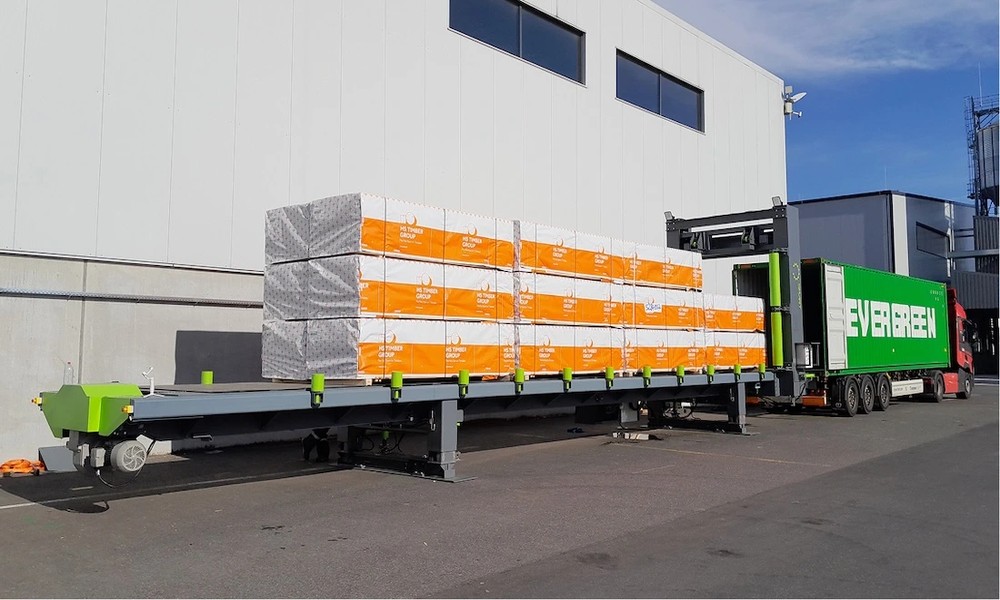
Many companies also integrate vacuum handling equipment into an Automatic Loading and Unloading System to improve warehouse automation and reduce manual labor.
Cons of Vacuum Tube Lifters
Limited Product Compatibility
Vacuum tube lifters work best with products that have relatively smooth and sealed surfaces. Porous, irregular, or unstable products may be difficult to handle effectively.
Lower Weight Capacity
Although vacuum tube lifters are excellent for lightweight and medium-weight items, they are generally less suitable for extremely heavy industrial components.
Dependence on Vacuum Stability
Vacuum suction performance can be affected by product surface quality, air leakage, or environmental conditions.
Pros of Pneumatic Lift Assist Arms
Higher Lifting Capacity
Pneumatic lift assist arms can handle much heavier loads than vacuum tube lifters. This makes them suitable for industrial applications involving metal parts, machinery, or large components.
Excellent Positioning Precision
Lift assist arms provide stable and controlled movement, allowing operators to position products accurately during assembly or production operations.
Flexible Gripper Options
Unlike vacuum tube lifters, pneumatic lift assist arms can use multiple end-effectors such as:
- Hooks
- Clamps
- Magnetic grippers
- Custom tooling
- Vacuum suction tools
This flexibility allows businesses to handle a wider variety of products.
Improved Safety for Heavy Loads
The rigid mechanical structure of lift assist arms provides greater stability when lifting heavy or awkward materials, reducing the risk of accidents during handling.
Cons of Pneumatic Lift Assist Arms
Higher Equipment Cost
Pneumatic lift assist arms often involve higher upfront investment costs, especially for customized industrial applications.
More Complex Installation
These systems may require compressed air infrastructure, stronger mounting structures, and more advanced integration planning.
Slower Handling for Repetitive Carton Operations
For simple high-speed carton handling tasks, pneumatic lift assist arms may not be as fast as vacuum tube lifters.
Which Solution Improves Productivity More?
The answer depends largely on the operational environment.
Vacuum tube lifters are usually better for:
- Fast repetitive carton handling
- Warehouse logistics
- Packaging operations
- Lightweight product movement
Pneumatic lift assist arms are generally better for:
- Heavy industrial products
- Precision positioning tasks
- Complex assembly operations
- Irregular material handling
Some factories combine both technologies as part of a larger Automatic Loading and Unloading System to maximize operational flexibility and productivity.
Workplace Ergonomics and Safety
Both systems significantly improve workplace ergonomics compared to manual lifting.
By reducing repetitive lifting and physical strain, businesses can:
Investing in ergonomic lifting solutions also helps companies meet workplace safety regulations and reduce long-term compensation costs.
Conclusion
Vacuum tube lifters and pneumatic lift assist arms each offer unique advantages for modern material handling operations. Vacuum tube lifters provide speed, simplicity, and efficiency for repetitive handling tasks, while pneumatic lift assist arms deliver greater lifting power, flexibility, and precision for industrial applications.
Choosing the right solution depends on product type, weight, operational complexity, and long-term productivity goals. As automation technologies continue to evolve, ergonomic lifting systems will remain essential tools for improving efficiency and workplace safety across industries.